SPEAKER |
Speakers |
Professor Eduard Babulak IEEE Senior Member Liberty University, USA | Professor Eduard Babulak, is accomplished international scholar, researcher, consultant, educator, professional engineer and polyglot, with more than thirty years of experience. He served as successfully published and his research was cited by scholars all over the world. He serves as Chair of the IEEE Vancouver Ethics, Professional and Conference Committee. He was Invited Speaker at the University of Cambridge, MIT, Purdue, Yokohama National University and University of Electro Communications in Tokyo, Japan, Shanghai Jiao Tong University, Sungkyunkwan University in Korea, Purdue, Penn State in USA, Czech Technical University in Prague, University at West Indies, Graz University of Technology, Austria, and other prestigious academic institutions worldwide. His academic and engineering work was recognized internationally by the Engineering Council in UK, the European Federation of Engineers and credited by the Ontario Society of Professional Engineers and APEG in British Columbia in Canada. He was awarded higher postdoctoral degree DOCENT – Doctor of Science (D.Sc.) in the Czech Republic, Ph.D., M.Sc., and High National Certificate (HNC) diplomas in the United Kingdom, as well as, the M.Sc., and B.Sc. diplomas in Electrical Engineering Slovakia. He serves as the Editor-in-Chief, Associate Editor-in-Chief, Co-Editor, and Guest-Editor. He speaks 16 languages and his biography was cited in the Cambridge Blue Book, Cambridge Index of Biographies, Stanford Who’s Who, and number of issues of Who’s Who in the World and America. Speech Title: The Ultra-Smart Cyberspace driven by the AI & Humanoid Robotics Abstract: Given the current dynamic developments in the field of Mechanical Engineering, Mechatronics, Humanoid Robotics, AI, Nano & Bio Technologies, Semiconductors, Very Large Scale Integration, New Materials, and Smart Medicine, with the ubiquitous access to high-speed Internet 24/7, the Ultra-smart Cyberspace is becoming reality. The Smart Computational Systems are collecting, processing and analyzing a real-time medical data utilizing the Electronic Health Record (EHR) to fast treatment, prevention and healing of the wave of new viruses and diseases and ultimately safe human lives. The areas of research in the field of Mechanical Engineering, Mechatronics, Nano-Bio Technologies, Microelectronics, Computing and AI & Humanoid Robotics create a new platform for future e-Health utilizing new biomechanical humanoid devices. In light of currently ongoing developments of Covid-19 crisis, having effective real-time application of Ultra-smart Cyberspace, with applied AI & Robotics and Big Data will support critical live saving surgeries in Next generation tele-Medicine. Due to Covid-19, the humanity lives in the most dramatic times, yet despite of its most negative impact it does also inspire dynamic innovation, research and developments in the world of health, business, government, industry, plus., while promoting seamless creation of multidisciplinary teams of experts in the nation and worldwide. The author discuss the Ultra-Smart Cyberspace driven by the AI Humanoid Robotics in the Third Millennium with current and future dynamic trends in research, innovation and developments of Mechanical Engineering, Mechatronics, AI in Cyber Security, Computational Mechatronics, Smart Health, and cutting-edge Humanoid Robotics that would provide support to save lives and to make best real-time decisions worldwide. Together we may find the answer to a question: Will the AI be well understood and become part of our daily live or else? |
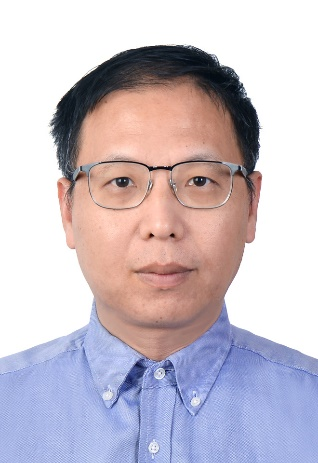
Professor Xiangjie Kong IEEE Senior Member Zhejiang University of Technology, China | Dr. Xiangjie Kong is currently a Full Professor with the College of Computer Science & Technology, Zhejiang University of Technology (ZJUT), Hangzhou, China. Previously, he was an Associate Professor with the School of Software, Dalian University of Technology (DUT), Dalian, China, where he was the Head of the Department of Cyber Engineering. He is the Founding Director of City Science of Social Computing Lab (The CSSC Lab) (http://cssclab.cn/). He is/was on the Editorial Boards of 6 International journals. He has served as the General Co-Chair, Workshop Chair, Publicity Chair or Program Committee Member of over 30 conferences. Dr. Kong has authored/co-authored over 180 scientific papers in international journals and conferences including IEEE TKDE, ACM TKDD, IEEE TNSE, IEEE TII, IEEE TITS, IEEE NETW, IEEE COMMUN MAG, IEEE TVT, IEEE IOTJ, IEEE TSMC, IEEE TETC, IEEE TASE, IEEE TCSS, WWWJ, etc.. 5 of his papers is selected as ESI- Hot Paper (Top 1‰), and 18 papers are ESI-Highly Cited Papers (Top 1%). His research has been reported by Nature Index and other medias. He has been invited as Reviewers for numerous prestigious journals including IEEE TKDE, IEEE TMC, IEEE TNNLS, IEEE TNSE, IEEE TII, IEEE IOTJ, IEEE COMMUN MAG, IEEE NETW, IEEE TITS, TCJ, JASIST, etc.. Dr. Kong has authored/co-authored three books (in Chinese). He has contributed to the development of 14 copyrighted software systems and 20 filed patents. He has an h-index of 49 and i10-index of 118, and a total of more than 7700 citations to his work according to Google Scholar. He is named in the2019-2021 world’s top 2% of Scientists List published by Stanford University. Dr. Kong received IEEE Vehicular Technology Society 2020 Best Land Transportation Paper Award, and The Natural Science Fund of Zhejiang Province for Distinguished Young Scholars. He has been invited as Keynote Speaker at 5 international conferences, and delivered a number of Invited Talks at international conferences and many universities worldwide. His research interests include big data, network science, and computational social science. He is a Distinguished Member of CCF, a Senior Member of IEEE, a Full Member of Sigma Xi, and a Member of ACM. Speech Title: Spatio-Temporal Graph Learning based Urban Travel Profiling Abstract: A modern city is a ternary space that contains the physical world, human society, and information space. Urban spatial-temporal data is the foundation of urban travel intelligence. Based on urban spatial-temporal data, the accurate description of travel information in cities is the premise of forecasting/warning and decision-making assistance. Spatio-temporal graph learning having been extensively used inurban travel profilling in recent years, proves effective for many tasks in real-world applications, such as regression, classification, clustering, matching, and ranking. Spatio-temporal graph learning brings new idea to solve the challenges for smart transportation, improve the efficiency of urban resource utilization, optimize urban management and services, and improve residents' lives quality towards smart cities. This report will explore the research frontiers of spatio-temporal graph learning-based urban travel profiling, traffic data mining and analysis and its application in intelligent transportation systems, and introduce some related work. |
Professor Zike Zhang Zhejiang University, China | Zi-Ke Zhang, Male, Ph.D in Information Physics in 2011 at University of Fribourg, Switzerland, now is serving as a Full Professor at College of Media and International Culture, Zhejiang University. Before that, he was a full professor at Research Center for Complexity Sciences at Hangzhou Normal University. His main research interests is the interdisciplinary area of data- and model-driven social computing oriented research questions, He has published more than 100 peer-reviewed journal papers with more than 5600 times from Google Scholar. He was also selected as Zhejiang Provincial Young academic Leaders (2017), and the Outstanding Teacher of Zhejiang Province (2018). Speech Title: Dynamics and Application of Hypergraph based high-order networks Hypergraph, as one of the most representative paradigm to describe wide-range high-order interactions, has provided a versatile yet powerful tool to illustrate a vast class of unsolved or incompletely described questions in complex networks. In this talk, I would like to briefly introduce the concept, methods, as well as our recent advances in evolution of scientist collaboration, information maximation and possible extensions, i.e. human pose estimation. |
Associate Professor Lei Chen Shandong University, China | Lei Chen received the B.Sc. and M.Sc. degrees in electrical engineering from Shandong University, Jinan, China, and the Ph.D. degree in electrical and computer engineering from University of Ottawa, Ontario, Canada. He is currently an Associate Professor with the School of Information Science and Engineering, Shandong University, China. His research interests include image processing and computer vision, visual quality assessment and pattern recognition, machine learning and artificial intelligence. He was the principal investigator of projects granted from the National Natural Science Foundation of China, National Natural Science Foundation of Shandong Province, China Postdoctoral Science Foundation, etc. He has published more than 40 papers on top international journals and conferences in recent years including IEEE TIP, Signal Process., ICME, etc. He was awarded the Future Plan for Young Scholars of Shandong University. He served for many international conferences including the ICIGP 2021, CSAI2022, MLCCIM2022, and ICIVC 2023 as Program Chair, Technical Chair or Publicity Chair. Speech Title: Machine Learning for Perceptual Image Quality Assessment Abstract: Visual analysis and machine learning are two important techniques in most academic, industrial, business, and medical applications. Visual analysis including image and video processing systems is closely related to various fields, such as visual quality assessment, automatic navigation, intelligent robots and smart healthcare, etc. Machine learning has obtained great success in vision, graphics, natural language processing, gaming, and controlling. With the rapid development of modern technology, people have higher expectations for the visual effects of images. The no-reference image quality assessment method (NR-IQA) guided by the human visual system is more in line with the way humans perceive the world. In this talk, we will report a NR-IQA method based on non-adversarial visual restoration networks. Moreover, we will report our method of combining binocular visual saliency weighting for the quality assessment of stereoscopic images. The performance of the proposed method has been evaluated on publicly available databases. The experimental results demonstrate the effectiveness and superiority of our proposed method compared to other related methods. |
Associate Professor Anwar P.P. Abdul Majeed IEEE Senior Member Xi'an Jiaotong-Liverpool University (XJTLU), China | Dr Anwar P.P. Abdul Majeed graduated with a first-class honours B.Eng. in Mechanical Engineering from Universiti Teknologi MARA (UiTM), Malaysia. He obtained an MSc. in Nuclear Engineering from Imperial College London, United Kingdom. He then received his PhD in Rehabilitation Robotics from the Universiti Malaysia Pahang (UMP). He is currently serving as an Associate Professor at the School of Robotics, XJTLU. Prior to joining XJTLU, he was a Senior Lecturer (Assistant Professor) and the Head of Programme (Bachelor of Manufacturing Engineering Technology (Industrial Automation)) at the Faculty of Manufacturing and Mechatronics Engineering Technology, UMP. He is also currently serving as an adjunct lecturer at UCSI University, Malaysia. Dr Anwar is also a Visiting Research Fellow at EUREKA Robotics Centre, Cardiff Metropolitan University, UK. Dr Anwar is a Chartered Engineer, registered with the Institution of Mechanical Engineers (IMechE), UK, a Member of the Institution of Engineering and Technology (IET), UK, as well as a Senior Member of the Institute of Electrical and Electronics Engineers (IEEE). He is an active research member at the Innovative Manufacturing, Mechatronics and Sports Laboratory (iMAMS), UMP. His research interest includes rehabilitation robotics, computational mechanics, applied mechanics, sports engineering, renewable and nuclear energy, sports performance analysis as well as machine learning. He has authored over 60 papers in different journals, conference proceedings as well as books. He serves as a reviewer in a number of prolific journals, such as IEEE Access, Frontiers in Bioengineering and Biotechnology, SN Applied Sciences, PeerJ Computer Science, and Applied Computing and Informatics, amongst others. He has also served as a Guest Editor for SN Applied Sciences, MDPI, Frontiers, as well as an Editor for several Springer book series. He is currently serving as an Academic Editor for PLOS ONE, a Review Editor for Frontiers in Robotics and AI, an Associate Editor for Frontiers in Rehabilitation Sciences and a section editor for Mekatronika (UMP Press). Dr Anwar is also a member of the Young Scientists Network of the Academy of Sciences Malaysia (YSN - ASM). With regards to learned/civil society activities, he is an active member of the IET Malaysia Local Network as well as acting as a Liaison Officer for the Imperial College Alumni Association Malaysia. Speech Title: Different Case Studies on the Employment of Feature-Based Transfer Learning Abstract: This keynote presentation explores the employment of feature-based transfer learning through a series of case studies. It introduces the concept of transfer learning and its benefits, focusing on the extraction and reuse of learned features from pre-trained models. The presentation showcases case studies in manufacturing, medical imaging, biosignals signals as well as sports. The keynote addresses challenges and considerations in transfer learning and emphasizes the importance of model selection, fine-tuning strategies, and evaluation metrics. Overall, it aims to inspire researchers and practitioners to leverage transfer learning to enhance performance and efficiency across diverse domains. |